


Buyer Guidance • 5 min read
What Is DDJAY? The Haryana Plotted-Colony Scheme Explained for Buyers
DDJAY is the 2016 Haryana policy that enables licensed, planned plotted colonies with essential infrastructure. Here is what it means, and why a named, licensed project matters.
The short answer: DDJAY is Haryana’s framework for licensed, planned plotted colonies
DDJAY stands for Deen Dayal Jan Awas Yojana, an affordable-housing policy introduced by the Government of Haryana in 2016. Its purpose is to enable licensed, well-planned plotted colonies that come with essential infrastructure, rather than leaving buyers to depend on unregulated land pockets. A project developed under this policy is a colony that has been approved and licensed by the state, follows a sanctioned layout, and is meant to be delivered with basic civic services.
For a buyer, the practical meaning is simple. A DDJAY project should carry a DTCP licence (the state’s town-planning approval to develop the colony) and, where the project is registered, a RERA registration number. Eligible buyers can typically access home loans from nationalised banks for plots in such projects. Cellular Realty’s plotted townships in Jhajjar, Farrukhnagar and Rewari are developed under this DDJAY framework.
This guide explains, in plain language, what the scheme is, how it connects to DTCP and RERA, how bank loans fit in, and why buying in a named, licensed DDJAY project matters. It does not attempt to reproduce every technical norm of the policy: for the precise rules (such as road-width standards, green-area ratios or any holding conditions), you should confirm the current text of the policy and the approved layout for your specific project.
What DDJAY is meant to achieve
DDJAY was introduced to bring more organised, affordable plotted housing into the market through a licensed route. Instead of scattered, informal plotting, the policy provides a framework under which a developer applies for a licence, follows a sanctioned layout, and is expected to provide essential infrastructure within the colony.
The idea a buyer should take away is that a DDJAY project is a regulated product, not an open piece of farmland. It sits inside a planning framework administered by the state. That framework is what gives the colony its legal standing, its approved layout, and its route to services and, eventually, registration of the plot.
It is worth being measured about what the policy guarantees. A licence and an approved plan set the rules and the intended standard. They do not, by themselves, prove that every road, water line or drain is already built on the ground on the day you visit. The paperwork tells you what is sanctioned; the site visit and the development status tell you what exists today. Both matter, and a careful buyer checks both.
How DDJAY connects to DTCP licensing
The Directorate of Town & Country Planning, Haryana (DTCP) is the authority that issues the colony licence. When a developer wants to build a licensed plotted colony under DDJAY, DTCP is the office that grants approval to develop that land as a colony and sanctions the layout.
For a buyer, the DTCP licence is the first document to check. It ties a specific piece of land, a specific developer, and a specific approved layout together. A genuine, licensed project will be able to show you its DTCP licence number, and you can verify that number against the Haryana DTCP records rather than relying only on a brochure.
As real examples, Cellular Realty’s projects carry their own DTCP licence numbers:
These plotted townships offer plot sizes in the 90–180 Sq. Yd. range. The point of showing the numbers is not the numbers themselves: it is the habit. A named project you can look up is fundamentally different from an unnamed “plots available” offer that cannot be traced to a licence.
How DDJAY connects to RERA
DTCP licenses the colony. RERA, the Real Estate (Regulation and Development) framework administered in the state through the Haryana Real Estate Regulatory Authority (HRERA), governs the sale and disclosure side. Where a project is registered, it carries a RERA registration number that a buyer can verify on the HRERA portal.
Two checks matter when you verify a RERA number:
- It should match the project. The registration should correspond to the exact project and phase you are being sold, not a different or older project by the same developer.
- It should match the promoter. The registered promoter should be the entity you are actually transacting with.
A registered project also brings disclosures (such as the approved plan, timelines and project details) into the public record, which is precisely why verifying the number yourself is more reliable than accepting a claim at face value. In some cases a project may be at the stage of “on registration,” meaning it is registered and the number is awaited. That is a normal stage, but it is one to confirm directly rather than assume, and to revisit before you pay.
Home loans from nationalised banks
One practical benefit of the licensed DDJAY route is financing. Eligible buyers can typically obtain home loans from nationalised banks for plots in these projects, subject to the bank’s own approval and criteria.
This matters for two reasons. First, it widens who can realistically buy, because the purchase does not have to be funded entirely from savings. Second, a bank’s willingness to lend against a plot involves the bank running its own due diligence on the project’s approvals and title. That independent scrutiny is a useful, if indirect, signal, though it is never a substitute for your own verification.
Keep the caveats honest. Loan eligibility depends on the buyer’s profile, the specific project, and the lending bank’s policies at the time. Approval is not automatic, and terms vary. Treat financing as available-in-principle for eligible buyers rather than guaranteed for everyone.
Why buying in a named, licensed DDJAY project matters
The core reason is traceability. A named, licensed DDJAY project can be checked, end to end: the DTCP licence against Haryana DTCP records, the RERA number (where registered) against the HRERA portal, and the plot against an approved layout. An unnamed or unlicensed land offer usually cannot survive those checks, and that is the whole point of doing them.
There is also a planning dimension. In Jhajjar, for example, Sectors 36 and 37 are designated residential in the Jhajjar Final Development Plan 2031, and Jhajjar is officially part of the NCR. A licensed colony inside a residentially designated sector sits within an intended plan for the area. That context does not guarantee outcomes or timelines, but it is a meaningfully different starting point from an isolated, unplanned pocket.
A short due-diligence checklist
Before committing to any DDJAY plot, verify independently:
- the DTCP licence number, against Haryana DTCP records;
- the RERA (HRERA) registration, and that it matches both the project and the promoter;
- the approved layout plan and your exact plot’s size and location within it;
- land title and ownership records;
- current on-ground development status of roads, water, drainage and other services;
- your loan eligibility with the bank, in writing, before relying on it;
- the current text of the DDJAY policy for any specific norm (road widths, green ratios, holding conditions) rather than assuming a figure;
- total cost, including all applicable charges and taxes.
None of this is about distrust. It is the ordinary discipline that a licensed, named project is actually designed to support, because everything it rests on can be looked up.
Sources
The DDJAY policy is a Government of Haryana affordable-housing policy introduced in 2016. Colony licences are issued by the Directorate of Town & Country Planning, Haryana (DTCP), and can be verified against Haryana DTCP records. Project registration is verified through the Haryana Real Estate Regulatory Authority (HRERA) portal. The DTCP licence numbers, RERA numbers and plot sizes cited for Cellular Realty’s projects are as recorded for those projects; the sector designations for Jhajjar are drawn from the Jhajjar Final Development Plan 2031 and NCR designation. Policy norms, project details, registration status and loan eligibility can change. Buyers should verify every figure, licence, registration and approval independently, and confirm the current text of the DDJAY policy, before making a financial commitment.
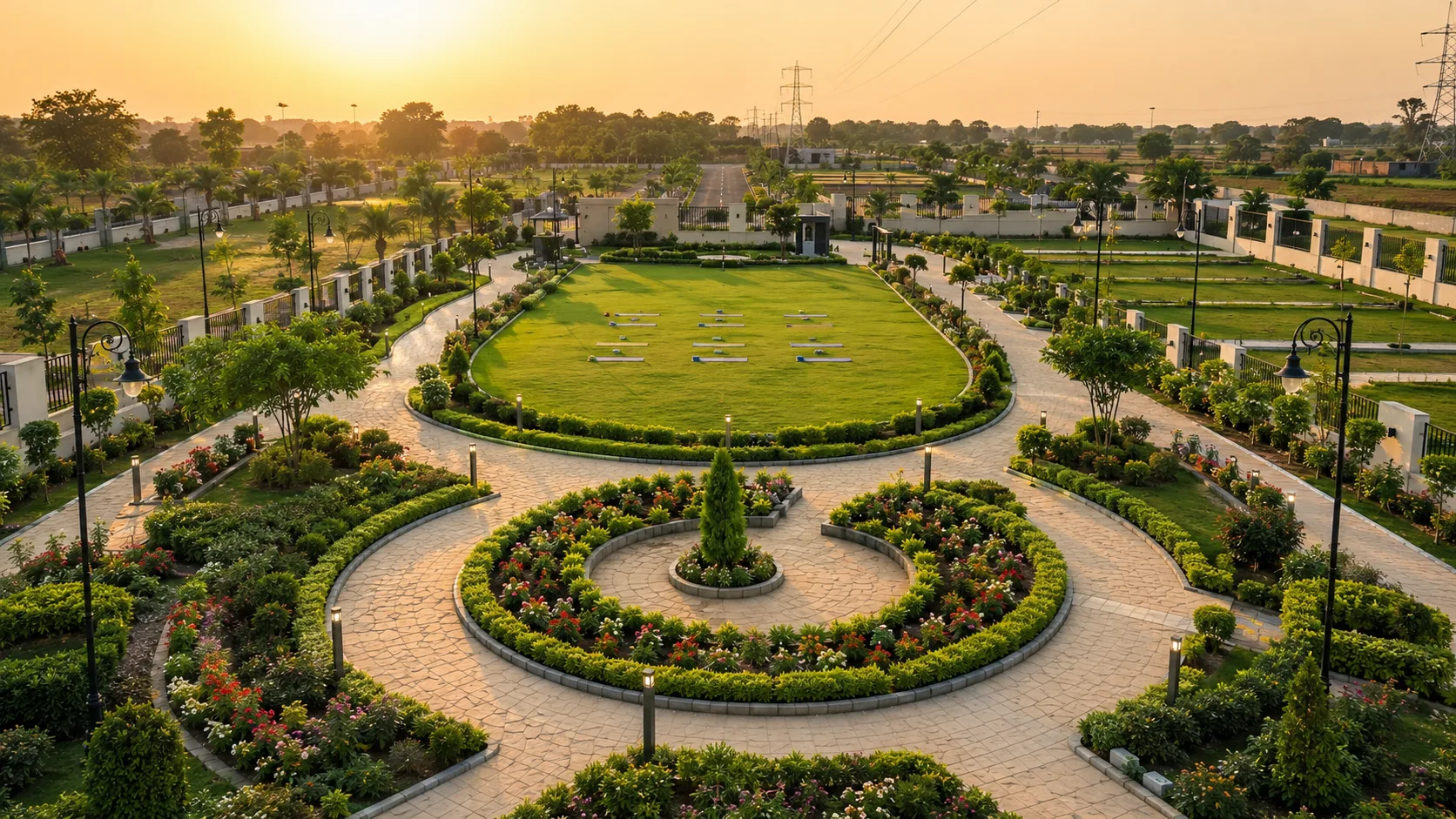
Related Project
South City Greens
Sector 36, Jhajjar